Last Updated: November 17, 2026
Quick Summary
Gua sha is a traditional Chinese practice where a smooth-edged tool is gently stroked across the skin to support a healthy, rested look. Its benefits for skin health are often promised but rarely explained, and research on gua sha for skin is still limited. Effects such as blood flow changes are often temporary.
- Use feather-light pressure and stop if your skin hurts.
- Hold the tool at roughly a 15- to 30-degree angle.
- Work upward and outward, from the center of the face toward the ears and hairline.
- Apply a slip layer such as facial oil or balm so the tool glides without dragging.
- Skip gua sha over active acne cysts, eczema or rosacea flares, cold sores, sunburn, or broken skin.
Table of Contents
- What Gua Sha Does for Skin Health
- How to Use Gua Sha on Your Face
- Gua Sha Before and After: Realistic Results and Gua Sha for Jawline
- Frequently Asked Questions
What Gua Sha Does for Skin Health
Gua sha benefits for skin health are often promised but rarely explained. This guide looks at what the tool can and cannot do. Gua sha is a traditional Chinese practice where a smooth-edged tool is gently stroked across the skin to support a healthy, rested look. (Source: American Academy of Dermatology)
Commonly discussed effects focus on blood flow and fluid movement, though these are often temporary and research on gua sha for skin is still limited.
Watch out: pressing too hard can cause bruising or irritation, so use light pressure and stop if your skin hurts (Scar massage information).
How to Use Gua Sha on Your Face
A safe facial routine is less about the tool and more about pressure, lubrication, and direction. Start with clean skin and a slip layer, facial oil, rich moisturizer, or massage balm, so the stone glides without dragging; if it tugs, add more product rather than pressing harder.
Pressure and angle. Hold the tool at roughly a 15- to 30-degree angle and use feather-light pressure. Work in short, gentle strokes, repeating each a few times.
Direction of strokes. Work upward and outward, from the center of the face toward the ears and hairline.
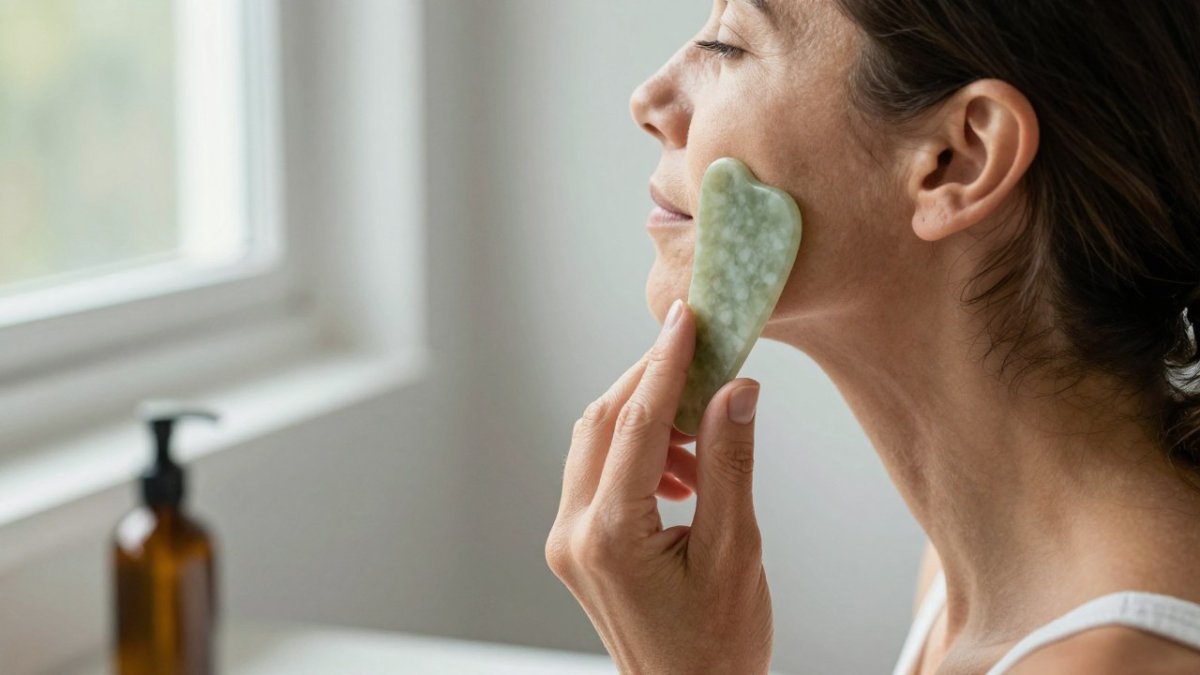
Adapting for skin type. People with sensitive or rosacea-prone skin should be especially gentle, use minimal passes, and stop if the skin becomes irritated. Acne-prone skin should avoid active blemishes and use a tool that can be cleaned thoroughly. Anyone using prescription retinoids or acids should reduce pressure and session length.
Hygiene. Wash the tool with mild soap and warm water after each use, dry it fully, and store it cleanly. Avoid sharing a tool with someone who has an active skin infection, and replace a cracked or chipped stone since rough edges can scratch skin. (Source: National Center for Complementary and Integrative Health)
Watch out: pressing hard enough to leave marks, or working over broken skin, can cause bruising and irritation that outlast any benefit, stop if the skin stings, burns, or breaks.
The article’s key settings for a safe facial routine come down to pressure, angle, and direction, summarised below.
| Element | Guidance | Note |
|---|---|---|
| Pressure | Feather-light | Stop if skin hurts |
| Angle | Roughly 15-30 degrees | Hold the tool steady |
| Stroke length | Short, gentle strokes | Repeat each a few times |
| Direction | Upward and outward | Center toward ears and hairline |
| Slip layer | Facial oil, rich moisturizer, or balm | Add product rather than pressing harder |
| Tool cleaning | Mild soap and warm water | Dry fully after each use |
Gua Sha Before and After: Realistic Results and Gua Sha for Jawline
Before-and-after photos compress time and lighting, so separate what changes quickly from what does not. A commonly noticed difference after a session is temporary puffiness and flushing, which typically fade within hours. Any more sculpted look is generally short-term and does not reflect a change in bone, fat, or muscle. Evidence for lasting facial skin changes is limited.
When to skip or check first. Gua sha is not appropriate over active acne cysts, eczema flares, rosacea flares, cold sores, sunburn, or broken or infected skin. People who bruise easily, take blood thinners, or have a bleeding disorder should ask a qualified provider first, and should seek advice if spreading redness, warmth, pain, or swelling appears after a session.
Tool versus hands, rollers, and professional treatments. Hands are free and easiest to control for sensitive skin; rollers offer cooling but cover less surface per stroke; a gua sha tool offers a firm, flat edge for contouring, though technique matters more than material, jade, rose quartz, and stainless steel all work when used gently. Professional facial massage or lymphatic drainage involves trained practitioners and typically costs more. The best choice depends on your goal, skin reactivity, and consistency.
For personalized guidance, schedule a consultation with Jenelle Girard Acupuncture to discuss whether this approach fits your health goals.
Frequently Asked Questions
Does gua sha make your skin better?
Some people notice a temporary change in how their skin looks after a session. Evidence for lasting changes in skin structure, such as collagen production, is limited. Results vary by person and by technique. If you have a specific skin concern, a dermatologist or licensed acupuncturist can help you set realistic expectations.
What are the downsides of using gua sha?
Redness and temporary bruising are among the commonly reported effects. Irritation and flare-ups can happen with too much pressure, rough tools, or use on active acne, rashes, or inflamed skin. Stop if you notice pain, swelling that persists, or any skin breakdown. Clean your tool after each use and avoid sharing it to reduce infection risk. People with skin conditions, bleeding disorders, or who take blood thinners should check with a healthcare provider first.
Can gua sha define your jawline?
Any change in how the jawline looks after a session is typically temporary and depends on your bone structure, body weight, and fluid balance. No evidence confirms that gua sha permanently reshapes the jaw. For a clearer picture of what to expect from your own face, book a consultation with a qualified provider.
